

AGRICULTURE
Feeding California. Connecting Global Markets. Growing Opportunity.

WHY AGRICULTURE THRIVES IN SOLANO COUNTY
Solano County combines fertile farmland, a Mediterranean climate, strategic transportation corridors, and close proximity to the Bay Area, Sacramento, Napa Valley, and the Port of Oakland. These advantages support one of California's most diverse agricultural economies.
Agriculture generated a record $476.2 million in gross production value in 2025, led by almonds, cattle, tomatoes, wine grapes, nursery products, and a growing international export market.
BY THE NUMBERS
Solano County agriculture reached its highest production value on record in 2025, supported by a diverse mix of farms, ranches, orchards, vineyards, nurseries and field crops.
AGRICULTURE BY CROP GROUP
Solano County’s agricultural economy is supported by a broad range of crop and animal production sectors.
TOP 10 COMMODITIES
Solano County agriculture reached a record $476.2 million in gross production value in 2025. Almonds led the county’s diverse agricultural economy, followed by cattle and calves, processing tomatoes, wine grapes, nursery products, field crops, fruit crops and pollination services.


Almonds
Almonds remained Solano County’s leading commodity and became the first crop in county history to exceed $100 million in annual value.

Cattle & Calves
Cattle and calves reached a new county record in 2025, increasing by more than $16.5 million from the previous year.

Processing Tomatoes
Processing tomatoes remain one of Solano County’s most important crops and a major connection between local agriculture and food manufacturing.

Wine Grapes
Solano County vineyards produced approximately 22,000 tons of wine grapes in 2025 across red and white varietals.

Nursery Products
Nursery production includes greenhouse plants, ornamentals, turf, grapevine rootstock, grapevine cuttings and other propagative stock.

Alfalfa Hay
Solano County harvested approximately 17,400 acres of alfalfa in 2025, producing more than 92,000 tons.

Walnuts
Walnut acreage continued to decline in 2025, but stronger pricing helped increase the crop’s overall value.

Dried Prunes
Prunes remained Solano County’s largest tree-fruit crop, with approximately 6,820 tons produced in 2025.

Pollination
Commercial pollination supports almonds, berries, brassicas, cucurbits, prunes, sunflowers and other crops throughout the county.

Grain Corn
Grain corn returned to Solano County’s Top 10 commodities for the first time since 2014.
Source: 2025 Solano County Crop & Livestock Report. Values represent gross agricultural production and do not represent producer profit or loss.
AGRICULTURE ASSETS, RESOURCES AND INDUSTRY GROUPS
Solano County agricultural businesses benefit from local advocacy, technical assistance, research, regulatory support and programs that connect farmers, ranchers, growers and producers with resources, consumers and new markets. Explore organizations supporting the continued strength and growth of Solano County agriculture.
ORGANIZATIONS


EDUCATION, RESEARCH & INCENTIVES
Solano County agricultural businesses benefit from nearby university research, local technical assistance, workforce development, tax benefits, and programs supporting investment, innovation, and long-term agricultural land use.

UC Davis
Located near Solano County, UC Davis is internationally recognized for research and education in plant sciences, animal science, agricultural engineering, viticulture, food science, water management, and environmental stewardship.
Explore Programs
UC Cooperative Extension
UC Cooperative Extension connects Solano County farmers, ranchers, and agricultural businesses with university research and practical assistance in crop systems, livestock, pest management, natural resources, small farms, and local food systems.
Explore Resources
Farm Equipment Tax Exemption
Qualified farmers and ranchers may receive a partial sales and use tax exemption on eligible equipment, machinery, parts, and certain leases used primarily to produce and harvest agricultural products.
Review Eligibility
Williamson Act Program
Eligible agricultural property owners may receive reduced property tax assessments through long-term contracts that preserve land for agricultural production or compatible open-space uses.
Learn About the Program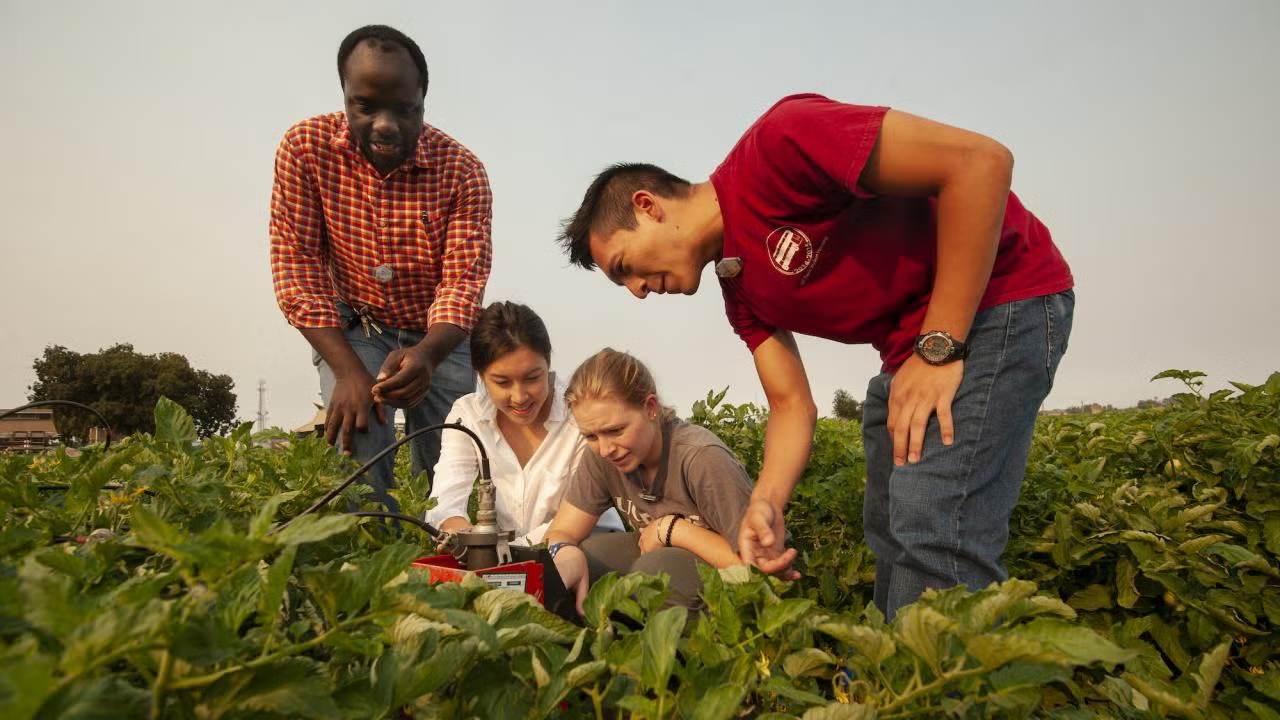
California Research Tax Credit
Agricultural, biotechnology, food science, and ag-tech businesses conducting qualified research activities in California may be eligible for a state income tax credit based on qualifying research expenses.
Review the Credit
California Competes Tax Credit
Agricultural companies, food processors, and ag-tech firms planning to locate, remain, or expand in California may compete for an income tax credit based on job creation, wages, investment, and broader economic benefits.
Explore the IncentiveProgram availability and eligibility requirements may change. Businesses and property owners should confirm current requirements with the administering agency and a qualified tax or legal professional.
GLOBAL MARKETS & EXPORTS
Solano County agricultural products reach customers throughout the world. In 2025, the Solano County Department of Agriculture issued 684 federal phytosanitary certificates for commodities exported to 32 countries.
Federal Export Certificates
Federal phytosanitary certificates issued for agricultural commodities exported from Solano County in 2025.
Export Countries
Solano County agricultural commodities were certified for shipment to markets across Asia, North America, Europe, Africa and the Middle East.
Domestic Certificates
State phytosanitary certificates were issued for agricultural commodities shipped to domestic markets during 2025.

From Solano County Fields to Global Markets
Export certification helps local farms, nurseries and agricultural businesses meet plant-health requirements for commodities entering international markets. In 2025, Japan was Solano County’s leading export destination by number of certificates issued.
TOP EXPORT DESTINATIONS
These five countries received the highest number of federal phytosanitary certificates for Solano County agricultural commodities.

Japan
237 Export Certificates
Republic of Korea
142 Export Certificates
Mexico
94 Export Certificates
China
39 Export Certificates
Canada
37 Export CertificatesTOP EXPORTED COMMODITIES
Hay, nursery stock and dried fruit were among Solano County’s most frequently certified agricultural exports in 2025.

Alfalfa
Export certificates issued

Sudangrass Hay
Export certificates issued

Strawberry Nursery Stock
Export certificates issued

Raisins
Export certificates issued

Ryegrass Hay
Export certificates issued
Agricultural Shipments Across State Lines
Solano County also issued state phytosanitary certificates for agricultural products shipped to domestic markets.
Explore the complete 2025 Solano County Crop & Livestock Report for additional export, production and agricultural industry information.
View the Full ReportSource: 2025 Solano County Crop & Livestock Report. Certificate totals reflect certificates issued and do not necessarily represent shipment volume, weight or monetary value.